About Us
Since 1983
Our Story
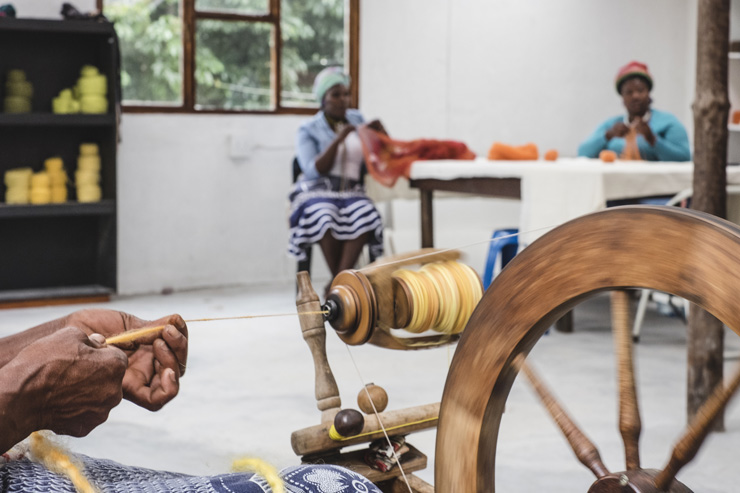
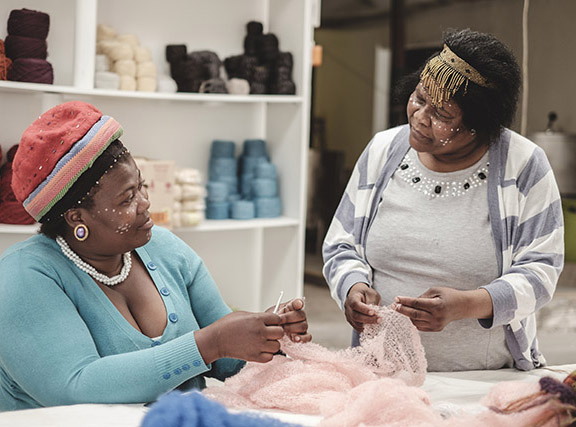
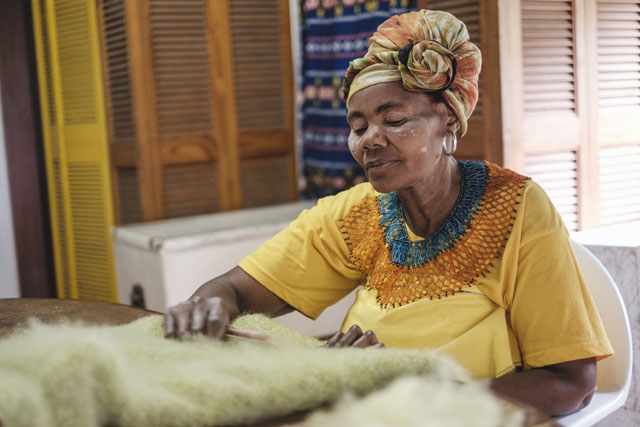
Based on the Eastern Coast of South Africa, our workshop provides meaningful employment and skills development for local women. Through training, mentorship, and hands-on experience, we help develop livelihoods and build a sustainable future for the community around us.
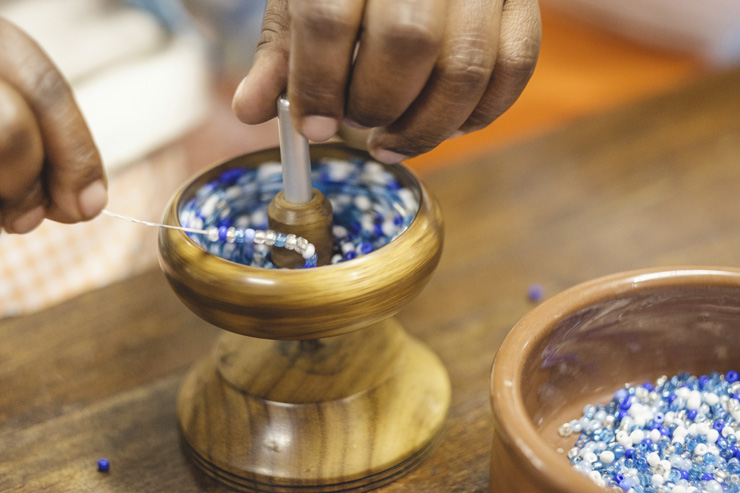
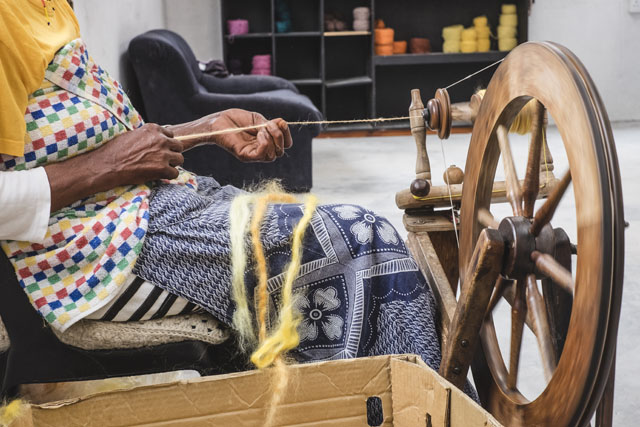
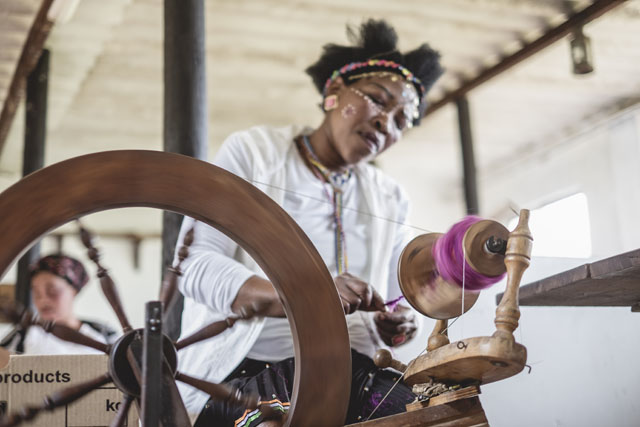
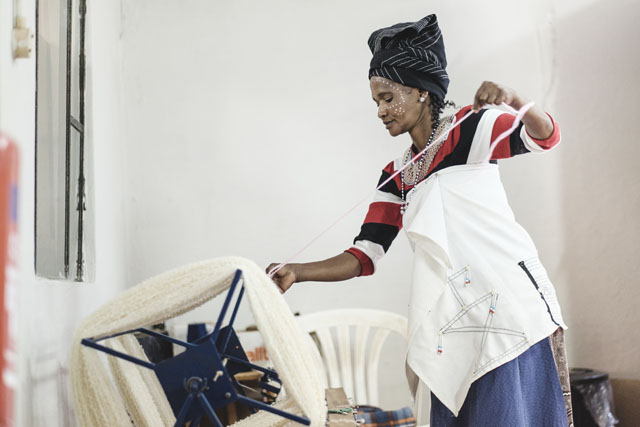
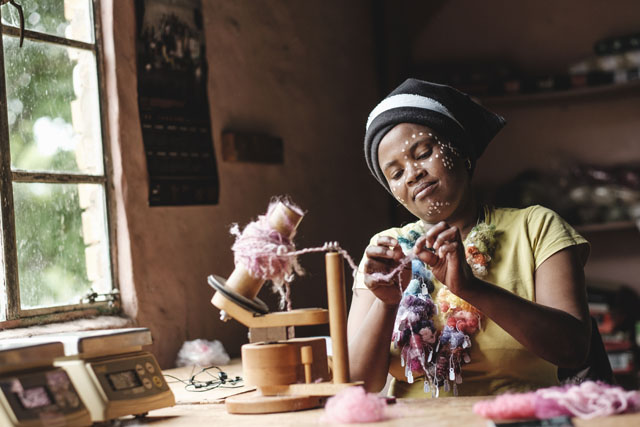
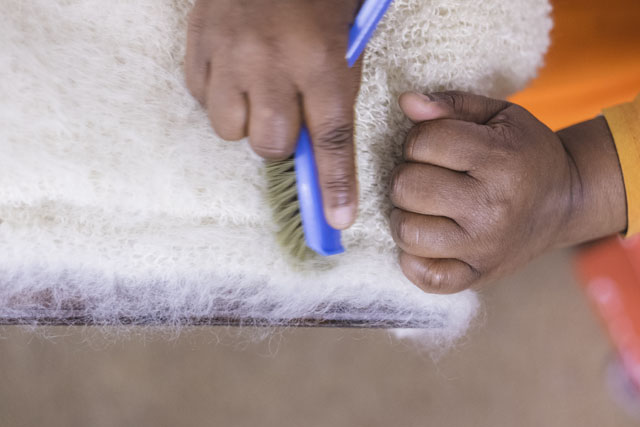
Using the finest natural fibres produced in South Africa, our artisans carefully create colourful, bespoke products that meet international standards of quality. Passing through a minimum of 13 pairs of hands before completion, every item is made with care and attention to detail.
Sustainability at the Heart of Everything We Do
Our entire production process is designed to be environmentally responsible.
- Offcuts and waste fibres are transformed into creative yarns and knitted products.
- Nothing goes to landfill.
- Our workshop operates using 100% solar-powered electricity.
Wastewater is naturally filtered and neutralised before returning safely to the environment. We believe that luxury products should not come at the expense of the planet or the people who create them,
Supporting Our Staff
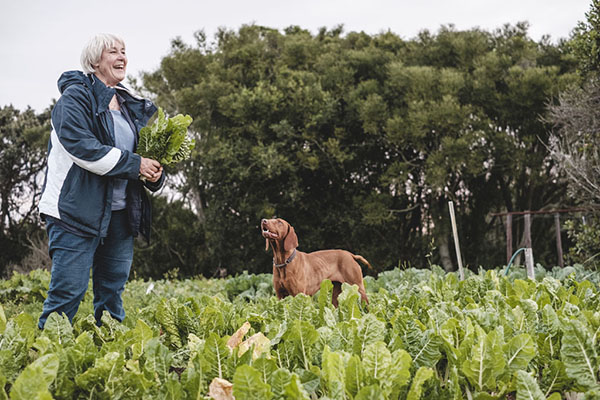
Beyond our workshop, we grow organic vegetables in our garden, providing affordable, nutritious produce for our workforce and helping to support the wellbeing of our community.
Every purchase contributes to job creation, skills development, environmental stewardship, and the preservation of handcrafted traditions. When you choose our products, you are choosing craftsmanship with a story – beautifully made, ethically created, and rich with purpose. This part highlighted I’m not sure if it belongs in this section, please use it elsewhere if needed. I’m open to suggestion


Adele's Story
The inspiration for my business came from my travels through the British Isles soon after graduation. I visited the Woollen Mills in Scotland and saw traditional Welsh weaving and Tweed made on hand looms on the Isle of Harris. What really sparked my imagination, however, was the work of an old woman living in a simple croft on the Isle of Harris. She was the official Queen’s weaver of Tweed. She collected her Wool off the fences; carded, spun, washed and dyed it with natural dyes and then wove the most incredible Tweed.
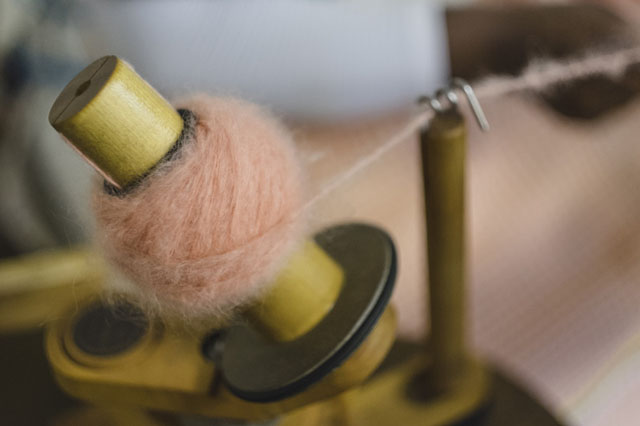
On return from my travels, I acquired a spinning wheel and learned the craft. Like the old lady of the isle, I was inspired to never make the ordinary, but to add real value to my craft. This has continued to be my goal. I dreamed of an ‘Aladdin’s cave’ of colour and texture and through trial and error and humorous mishaps my venture took off, belly-flopped, nosedived, resurfaced, swam a little and ended up as a happy, creative workshop full of colour and design.
The world of yarn and colour had drawn me into its exciting web.
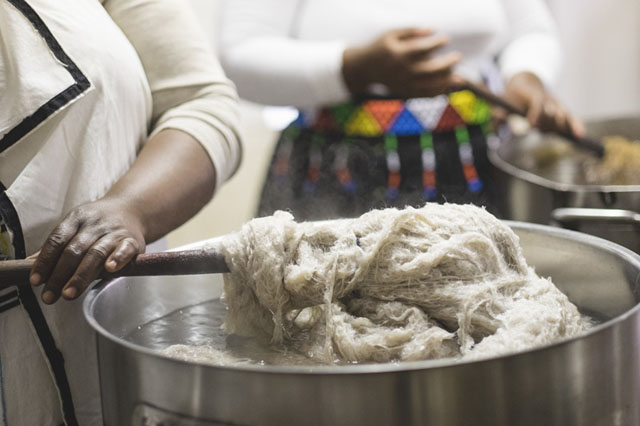
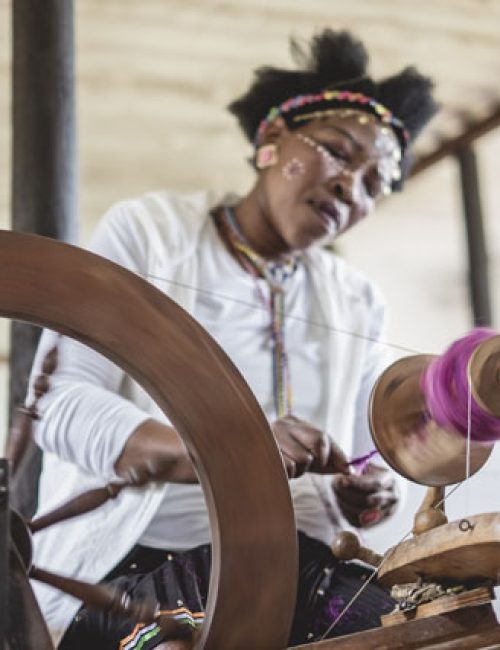
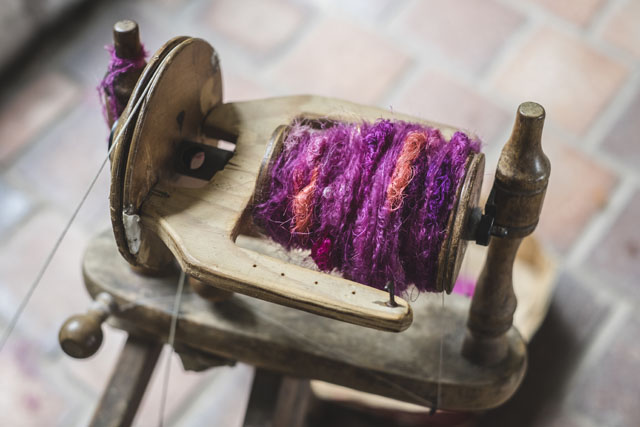
When I first opened the doors of Adèle’s Mohair in September 1983, it was an exploratory adventure in the field of handcrafted items. Each piece – made by myself – involved washing Wool, carding by hand (manipulating the teased Wool into sliver form), spinning and knitting.
A few months later, members of the rural community joined me, the first being a very special person called Liz Dyakala, who is working with me again after a 15-year hiatus. She left my employ, just prior to the general election that ushered in the new South Africa. The rural areas were in an upheaval, deterring bus loads of tourists, and the business went through a bad trading period.
Today, three original staff members are still with the business. Mavis Bhula has been with Adèle’s Mohair for 30 years. Her daughter started in the farm crèche opened to assist the working mothers. Jeanette Pase has given her daughter the opportunity to be educated – a privilege she never had.
Over the years, many rural women have joined our venture and gained valuable skills. I am proud of their achievements. Some have moved on to grow their lives – validating the time we invested in them. Some have stayed and given the business the best years of their lives. They have raised and educated their children and given them opportunities that they had never had
Initially, we stayed authentic to the natural colours of the Wool from sheep and the Mohair from the Angora goats but colour called and I began experimenting with natural dyes.
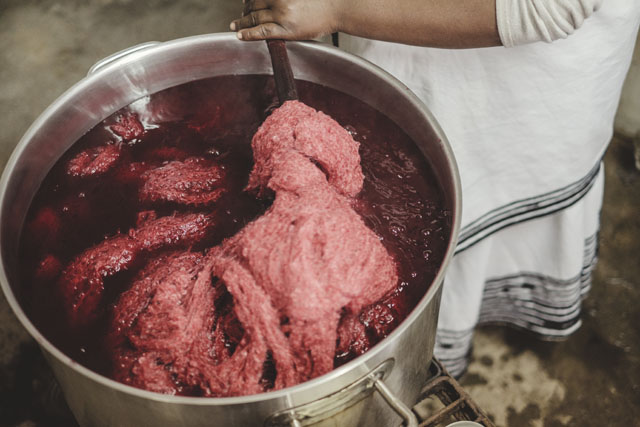
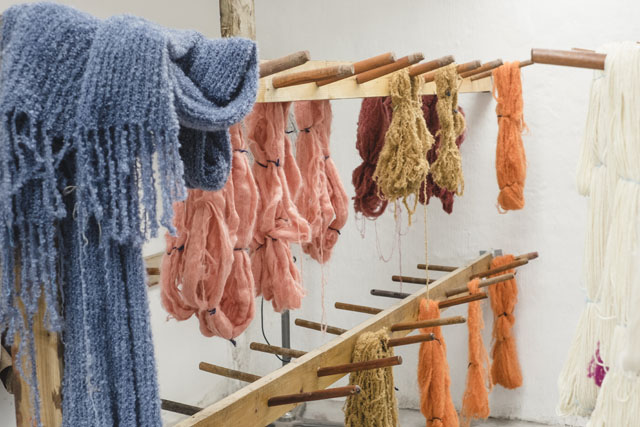
With drums of rotting onion skins, beetroot and geranium leaves and with the help of natural fixatives, I dyed the yarn. My family were up in arms over the smell and the changing colours of the cooking pots in the kitchen so I created a new space for production. My children dubbed me “the wicked witch” as I stirred my bubbling pots of dubious brew.
Eventually, I realised that I was using too much natural material and expansion would denude the environment. I switched to artificial dyes.
Today we use dyes that are strictly tested and accepted in the EU.
I was now doing a giddy dance to the opportunities of a new world of colour. Having mastered the art of dyeing, I trained Liz and she has since passed this legacy on to the younger women at the workshop. The hand knitting yarn range expanded in colour and creative composition.
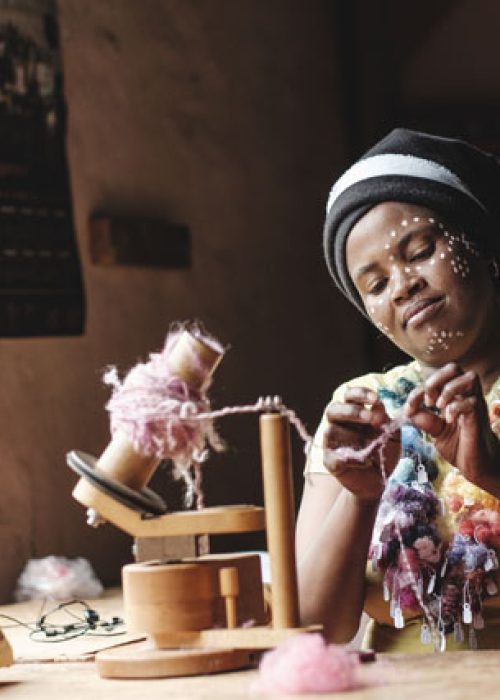
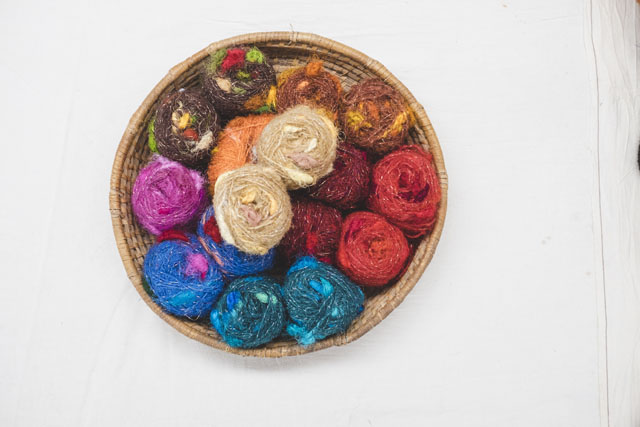
We evolved new, exciting and unusual hand knitting yarns by adding beads, ribbons, feathers, seashells and grandmother’s lace. Some are still part of our ranges today. Our workshop can be compared to a children’s toy store with all the joy, colour, creativity and fun of our new yarn creations.
As a rurally-based labour-intensive business, we can’t compete with industrial production but we can operate in a niche market with a wider range of colours and yarns that cannot be made by industrial machines. Our ranges are more exclusive and unique. Buying MADE BY HAND is not a cheap option but it ensures the item comes from the heart of some very special and talented person who freely and creatively plied their craft.
My team members are mainly of the Xhosa tribe (like Nelson Mandela) where, traditionally, the men were the politicians and the women worked in the fields. My journey has been to understand and respect their culture while trying to run a business that works for all. The women I work with are strong, united and stand up to adversity.
Our business is located on the eastern coast of South Africa between the two port cities of East London and Port Elizabeth. Our small 50 hectares of paradise is 3km from the sea (as the crow flies) giving us a beautiful coastal backdrop. The vegetation is natural fynbos (4000 unique species fall into this biome but not all are found on our property). Our farm forms the northernmost outcrop of fynbos. Most of our land is still in its natural state, affording me the privilege of walking my 5 dogs every evening (while I clear my head of daily business issues) a ‘back garden’ of beautiful wildflowers, bushes and birdlife.
In true communal fashion, we grow organic vegetables, propagate indigenous flowers, recycle kitchen waste and share with staff. This allows for extra hands to be employed to sustain local families. The worms share our harvest which brings butterflies and birds. Large trees in the garden attract nesting birds and bees complete the cycle.
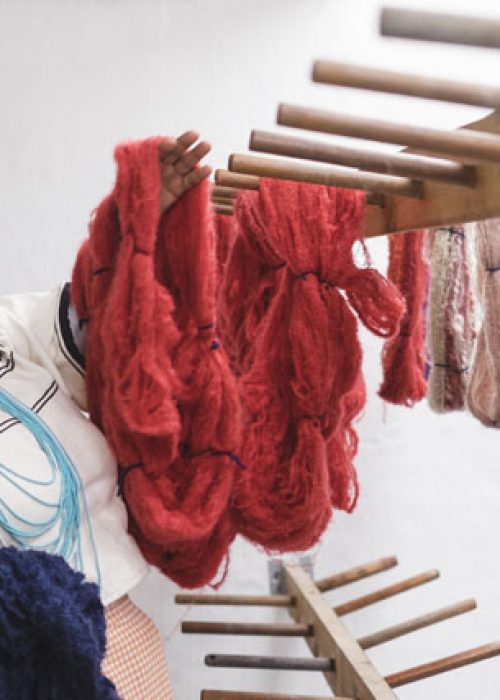
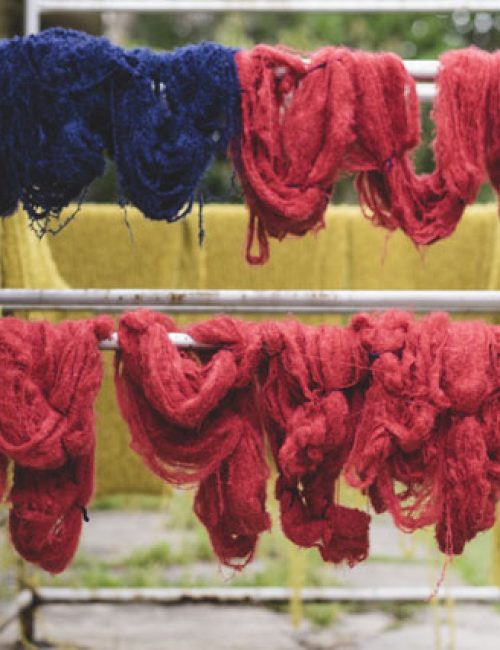
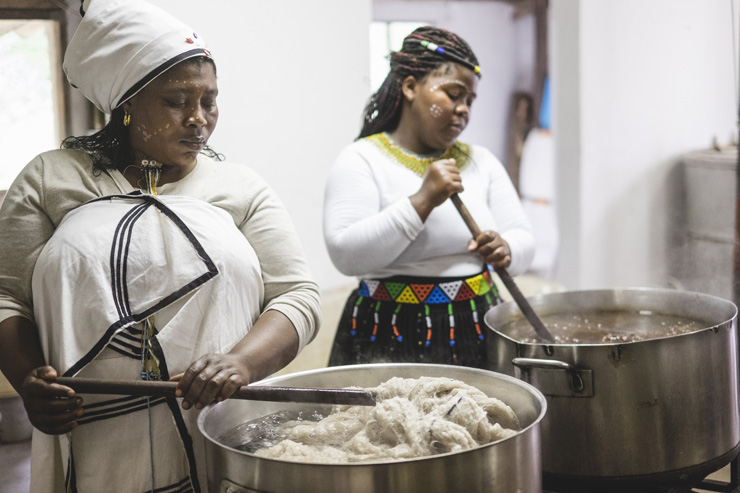
Many years ago the land was a working farm with many sheds and outbuildings. Today these have been converted into the workshop where we ply or craft. The women work inside or under the shade of the trees. Dyed yarns are racked outside to dry in wind and sunshine.
Our Process
Handcrafted Luxury
We love our craft and care is taken every step of the way to ensure our products
are unique and of the highest quality.
Have a look at a brief visual overview of how some of our products are made. Simply scroll down.
Handcrafted Luxury
Handcrafted Luxury